Best Mercedes V8s ever! [more…]

For a Better Class of Banger
For a Better Class of Banger
Best Mercedes V8s ever! [more…]
“built hastily of shoddy materials,” 1856, in a Liverpool context, from jerry “bad, defective,” probably a pejorative use of the male nickname Jerry (a popular form of Jeremy; compare Jerry-sneak “sneaking fellow, a hen-pecked husband” [OED], name of a character in Foote’s “The Mayor of Garret,” 1764).
Or from or influenced by nautical slang jury (adj.) “temporary,” which came to be used of all sorts of makeshift and inferior objects.

Please note the information listed here is vey much the Authors opinion and I accept no responsibility for the accuracy or veracity of the same.
Other makes will be added here…
A V8 has two banks of four cylinders arranged in a “V”, driving one crankshaft. Its compactness, smooth power delivery and potential for high output made it important in cars, aircraft, boats, racing and heavy vehicles.
French engineer Léon Levavasseur patented the V8 in 1902, he developed the engine for speedboats and early aircraft. It is generally regarded as the first V8 design.
He called it the Antoinette after the young daughter of his financial backer, and from 1904 had installed this engine in a number of competition speedboats and early aircraft.
1905–1910 – Early cars: Rolls-Royce briefly produced a V8-powered car, while De Dion-Bouton developed an early V8 produced in relatively significant quantities.
1932 – Ford Flathead: Ford’s inexpensive 3.6-litre flathead V8 brought eight-cylinder performance to the mass market. It became hugely influential in American cars, hot-rodding and early custom culture.
1967 onward – European performance V8s: Rover adapted an all-aluminium Buick V8 into the long-lived Rover V8, used in Range Rovers, Land Rovers, TVRs and numerous specialist cars. Rolls-Royce and Bentley also introduced their L-series V8 in 1959.
1980s–1990s – Electronics and efficiency: Fuel injection, computer engine management, aluminium construction and four-valve cylinder heads made V8s more powerful, cleaner and more economical. Notable examples include Mercedes-Benz’s performance V8s and BMW’s M60/M62 engines.
By the late 1980s, Mercedes-Benz wanted a high-performance version of its W124 E-Class that could compete with BMW’s M5. Instead of developing it entirely in-house, Mercedes partnered with Porsche—a collaboration that would become legendary.
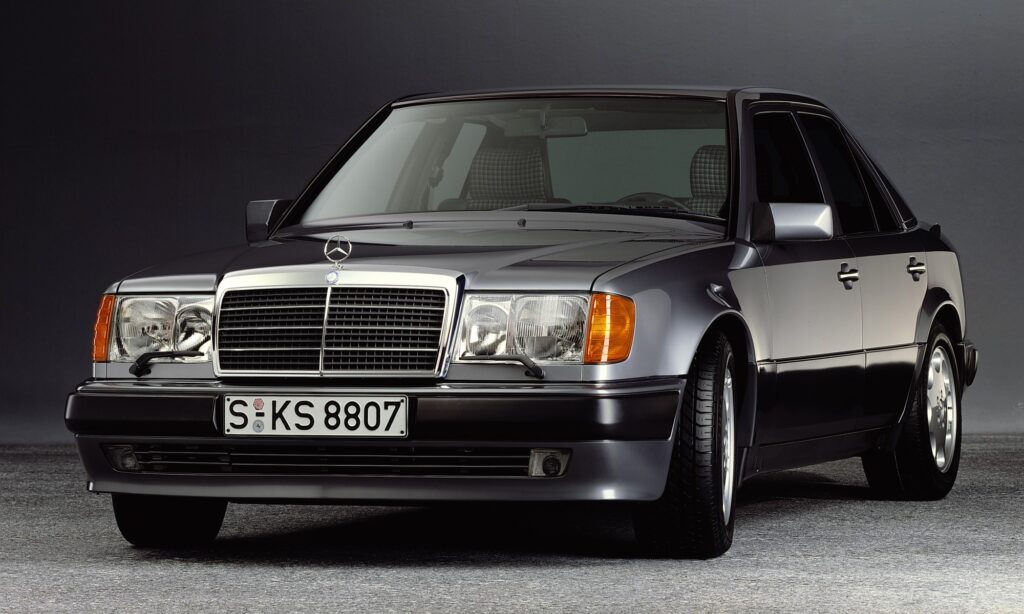
This “shuttle production” between factories meant each car took 18 days to complete.
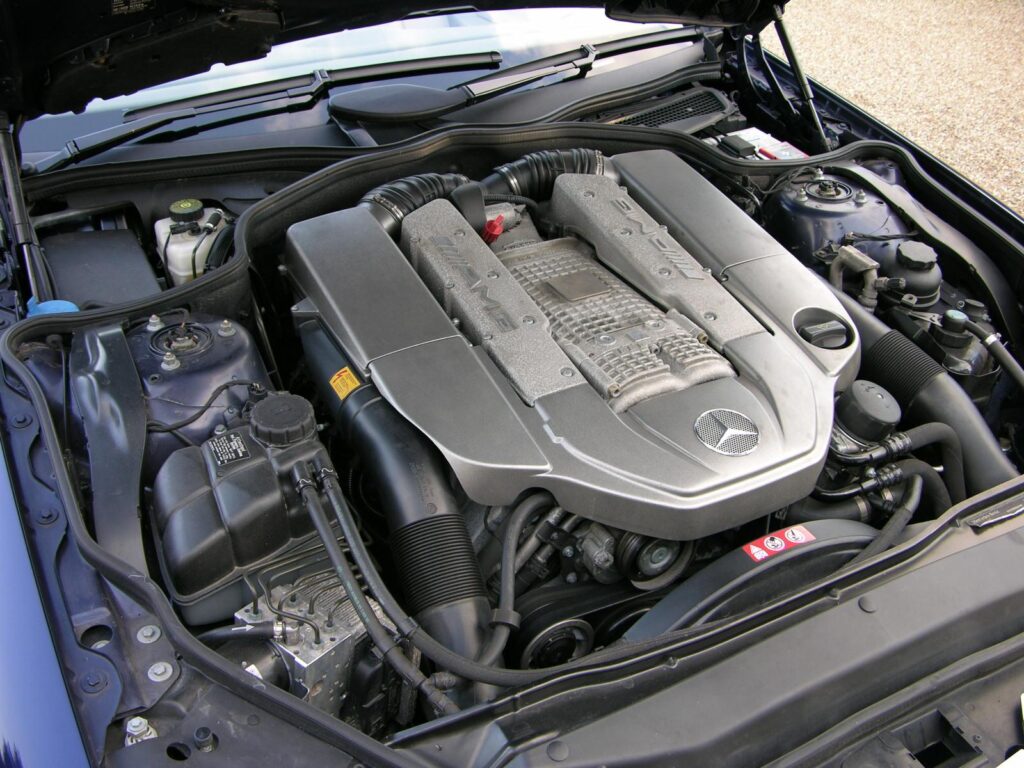
Acknowledge: By The Car Spy – Mercedes Benz SL55 AMG, CC BY 2.0
I covered over 120,000 miles in this, almost faultless.
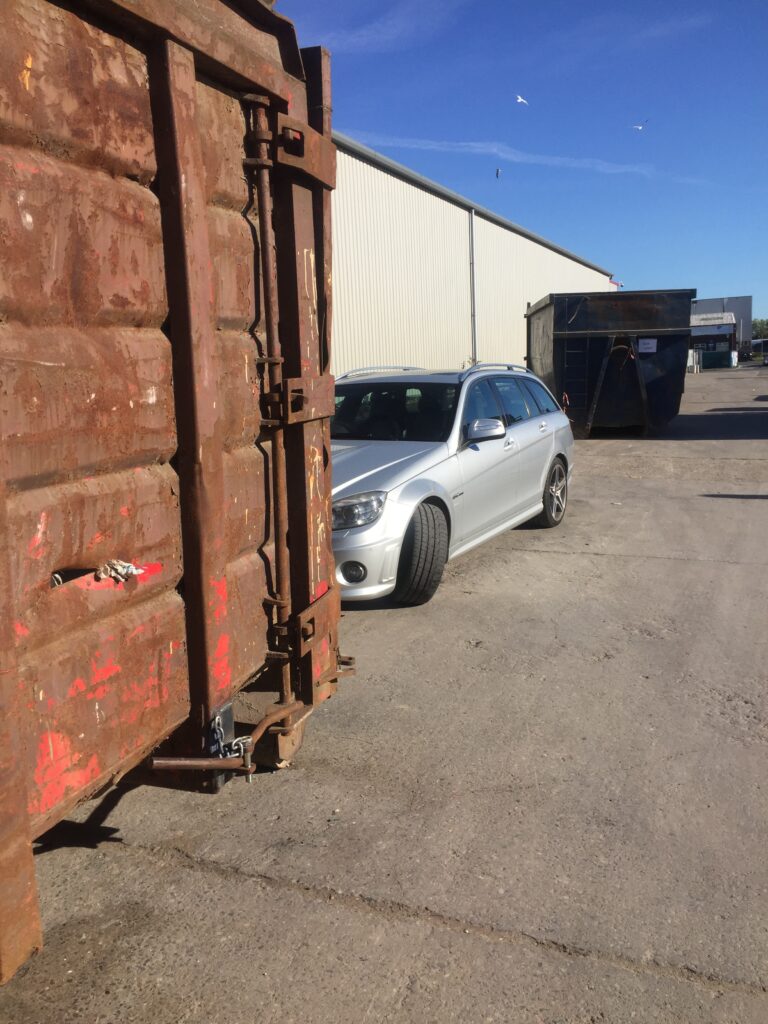
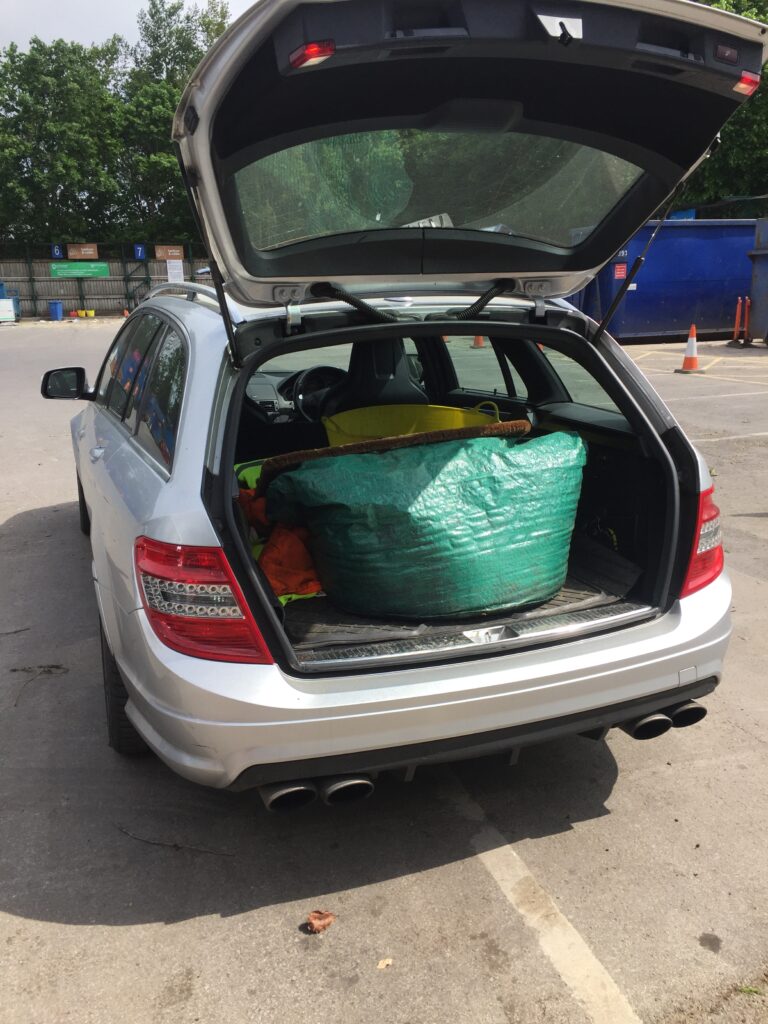
Mercedes V8 Hall of Fame
| Engine | Capacity | Character | Reliability | BetterBangers |
|---|---|---|---|---|
| M100 | 6.3/6.9L | Monumental | ★★★★☆ | 8/10 |
| M119 | 4.2/5.0L | Sophisticated | ★★★★☆ | 9/10 |
| M113 | 4.3/5.0L | Smooth & durable | ★★★★★ | 9/10 |
| M113K | 5.4L | Supercharged monster | ★★★★☆ | 9.5/10 |
| M156 | 6.2L | Naturally aspirated lunacy | ★★★☆☆ | 9/10 |
| M157 | 5.5L | Twin-turbo brute | ★★★☆☆ | 8/10 |
| M273 | 4.7/5.5L | Refined | ★★★☆☆ | 7.5/10 |
| M278 | 4.7L | Fast & sophisticated | ★★★☆☆ | 7/10 |
Chief designer of Mercedes responsible for many models
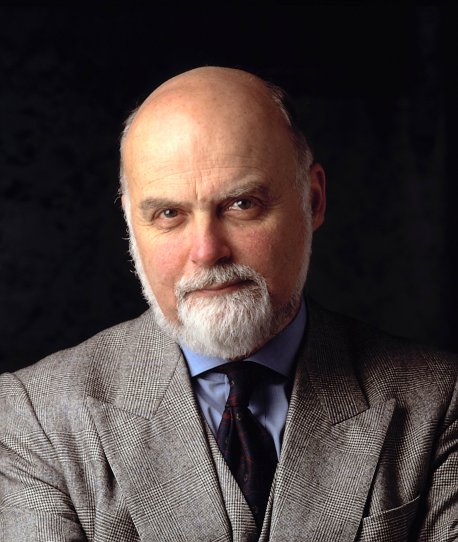
Bruno Sacco (12 November 1933 – 19 September 2024) was an Italian-German automobile designer and chief engineer, who served as the head of styling at the Daimler-Benz AG, the German manufacturer of Mercedes-Benz automobiles and trucks, from 1975 to 1999. Since Bruno Sacco was hired as a Mercedes-Benz stylist in 1958, his career and contributions to their vehicles’ industrial design spanned more than four decades.
| Engine Code | Cylinders | Models |
| M50 | Inline – 6 | E34, E36, early Z3 |
| M52 | Inline – 6 | E36, E39, Z3, E38 |
| M62 | V8 | E39, E38, E31 8 series, E53(X5) |
| M52TU | Inline – 6 | E36/7 Z3, E46, E39, E38 |
| M54 | Inline – 6 | E36, E49, E65, E53, Z3/Z4 |
| M56 | Inline – 6 | Z3 (USA only) |
| M62TU | V8 | E39, E38, E31, E53 |
| S54 | Inline – 6 | E46, Z3 M, Z4 M |
| N52 | Inline – 6 | E90, E60, E63, E65, E83, Z4 |
| N62 | V8 | E60, E65, E63, X5, X6 |