What to Look For, Common Problems and Best Specifications
The Audi B7 RS4 Avant is one of the great performance estates. With its naturally aspirated 4.2-litre V8, six-speed manual gearbox and quattro four-wheel drive, it offers a driving experience that is becoming increasingly difficult to find. But is it a sensible used buy, and what should you look for before handing over your money?
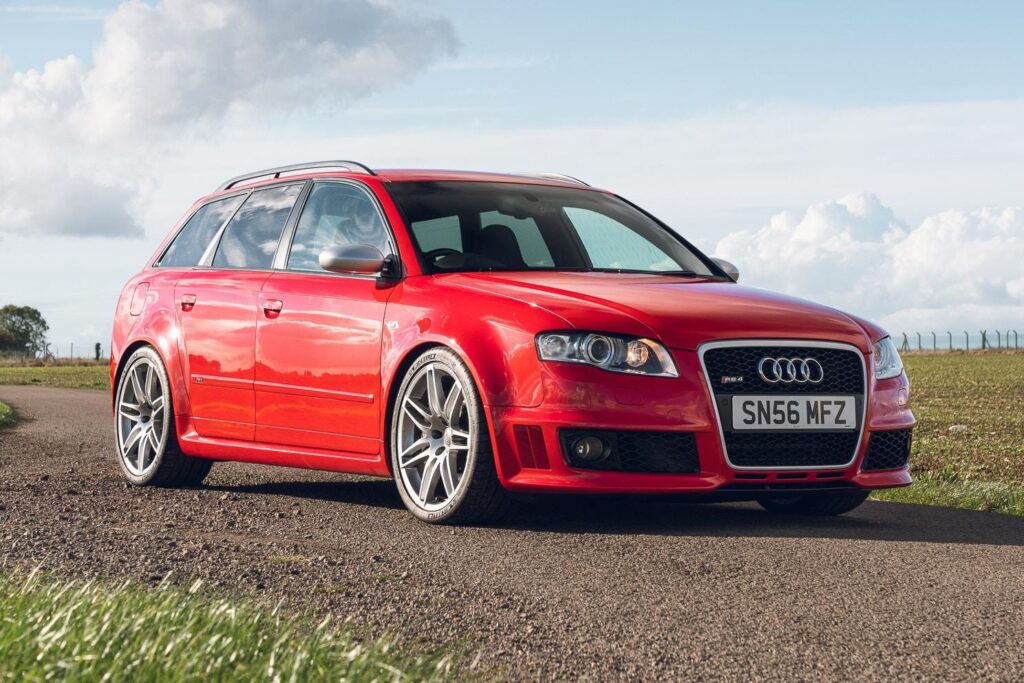
Introduction – The last of a special breed?
There is something rather special about the Audi B7 RS4 Avant. Launched in 2006, it combined the practicality of a family estate with the performance of a serious sports car.
At its heart is Audi’s 4.2-litre FSI V8, producing 414bhp and revving to an impressive 8,250rpm. Unlike many modern performance cars, there are no turbochargers to provide the power. Instead, the engine delivers its performance through high revs, accompanied by a wonderful V8 soundtrack.
Power is sent to all four wheels through a six-speed manual gearbox and Audi’s quattro four-wheel-drive system.
The result is a car capable of 0–62mph in approximately 4.7 seconds and a limited top speed of 155mph.
The B7 was produced between 2006 and 2008 and is increasingly regarded as one of Audi’s most memorable RS models.
But these cars are now approaching 20 years old. Maintenance, condition and service history are far more important than the mileage displayed on the dashboard.
Audi B7 RS4 Avant – At a glance
| Specification | Details |
|---|---|
| Production | 2006–2008 |
| Engine | 4.2-litre naturally aspirated V8 |
| Engine code | BNS |
| Capacity | 4,163cc |
| Power | 414bhp |
| Torque | 317lb ft |
| Maximum revs | 8,250rpm |
| Gearbox | Six-speed manual |
| Drive | quattro four-wheel drive |
| 0–62mph | Approximately 4.7 seconds |
| Top speed | 155mph (limited) |
| Body style | Five-door Avant estate |
| Fuel | Petrol |
The Engine – 4.2-litre FSI V8
The engine is undoubtedly the main attraction.
Audi’s BNS V8 is a naturally aspirated, direct-injection petrol engine. It produces its power high up the rev range, rewarding drivers who enjoy using the gearbox and exploring the engine’s full performance.
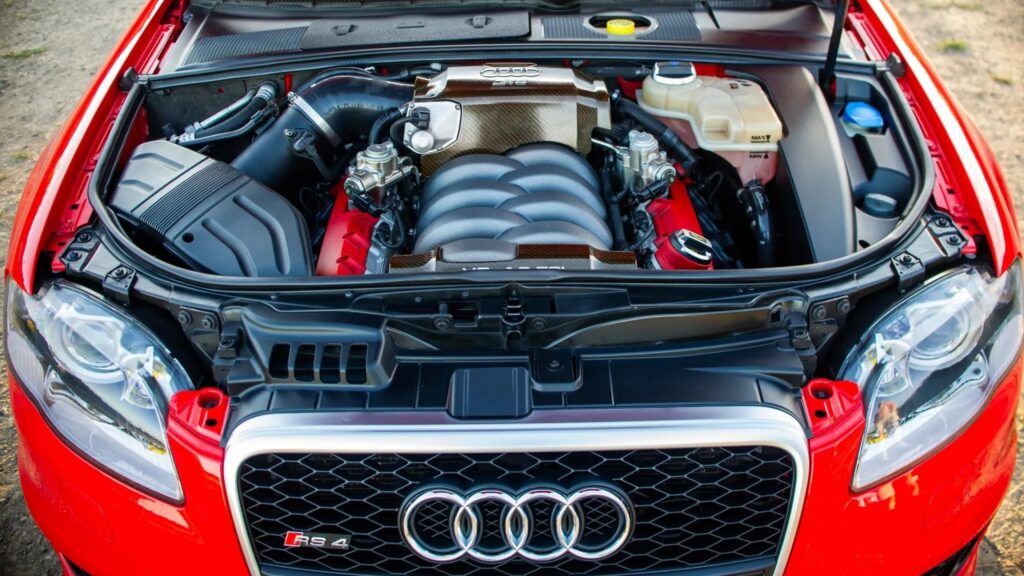
It is a fantastic engine when properly maintained, but there are several things to investigate.
1. Carbon build-up
This is one of the best-known problems with the B7 RS4.
Because the FSI engine uses direct injection, fuel does not wash over the inlet valves. Over time, carbon deposits accumulate and can restrict airflow.
Symptoms include:
- Rough or uneven idle.
- Reduced performance.
- Hesitation during acceleration.
- Misfires.
- Poor fuel economy.
A professional inspection can establish whether the engine needs decarbonising. Walnut blasting is a commonly used solution.
Allow approximately £500–£1,000 as a guide for specialist cleaning, depending on the work required.
Look for an invoice showing that this work has already been carried out.
2. Oil consumption
The B7 RS4 can consume a noticeable amount of oil, particularly when driven enthusiastically.
Ask the owner how much oil the engine uses between services.
Look for blue smoke from the exhaust, particularly after prolonged idling or when accelerating.
Excessive consumption should never simply be dismissed as normal RS4 behaviour. A specialist should investigate the cause.
3. Ignition coils and misfires
Coil-pack failure is another known issue.
Symptoms include rough running, hesitation and an engine management warning light.
A misfire should be investigated promptly because unburnt fuel can damage the catalytic converters.
Check whether the coils and spark plugs have been replaced as part of the maintenance history.
4. Timing chains and tensioners
Unlike many engines, the B7 V8 uses a timing chain rather than a conventional cambelt.
The chains are positioned at the rear of the engine, towards the gearbox.
Listen carefully when starting the engine from cold. A persistent metallic rattle deserves investigation by an RS specialist.
Timing-chain work can be expensive because of the labour involved in accessing the components.
Regular oil changes are particularly important.
Gearbox and quattro transmission
All B7 RS4s have a six-speed manual gearbox. There was no factory automatic version.
Fortunately, the gearbox has a good reputation, but it is worth checking:
- Smooth gear changes when cold and hot.
- No crunching when selecting second or third gear.
- No whining or unusual transmission noises.
- Clutch engagement is smooth.
- No clutch slipping under acceleration.
The clutch is an expensive component to replace, so check for evidence of previous replacement.
The quattro system is generally robust. Listen for unusual noises from the differentials and check for vibration or knocking during acceleration and tight turns.
Suspension – The Dynamic Ride Control system
The B7 RS4 uses Audi’s Dynamic Ride Control (DRC) suspension system.
This clever hydraulic arrangement links diagonally opposite shock absorbers to control body roll and pitching during enthusiastic driving.
It works extremely well when everything is in good condition, but it can become expensive when components begin to leak or lose pressure.
Things to look for include:
- Oil leaking from the shock absorbers.
- Knocking noises over uneven surfaces.
- Poor body control.
- Uneven tyre wear.
- Excessively harsh or unsettled ride quality.
Some owners have replaced the original DRC system with aftermarket suspension.
This is not necessarily a reason to reject a car, but check the quality of the conversion and the components fitted.
Personally, I would favour a car retaining its original DRC system, provided it is working correctly.
Brakes – Expensive but important
The RS4 has substantial braking equipment.
Standard front discs measure approximately 365mm, with 324mm discs at the rear.
Check for:
- Cracked or badly worn discs.
- Juddering under braking.
- Uneven pad wear.
- Sticking calipers.
- Corroded brake pipes.
- Evidence of recent replacement.
Replacement brakes can be expensive, particularly if genuine Audi parts are used.
Some cars were also specified with optional carbon-ceramic front brakes. These are desirable to some enthusiasts but replacement costs can be substantial.
Unless you specifically want this option, I would be quite happy with a well-maintained standard steel brake setup.
Bodywork and interior
The B7 RS4 is generally a well-built car, but age, previous accidents and poor repairs are worth considering.
The front wings and bonnet are aluminium, while the main body structure is steel.
Check carefully for:
- Poorly repaired accident damage.
- Uneven panel gaps.
- Stone chips and mismatched paint.
- Corrosion around door bottoms.
- Damage to the front bumper and lower grille.
- Water entering the boot.
- Damp carpets and evidence of previous leaks.
On the Avant, pay particular attention to the tailgate seals and boot area.
Inside, check the condition of the driver’s seat bolsters, steering wheel, gear knob and pedals.
Make sure all the electrical equipment works, including the navigation system, air conditioning, electric seats and parking sensors where fitted.
Which specification should you buy?
There are several options worth looking for.
My preferred specification
1. Recaro bucket seats
These are one of the most desirable factory options. They look fantastic and provide excellent support during spirited driving.
However, check the leather condition, adjustment mechanisms and seat bolsters carefully.
2. 19-inch alloy wheels
The optional 19-inch double-seven-spoke wheels suit the car particularly well.
Check for cracks, buckling and poor refurbishment.
3. Dynamic Ride Control
I would prefer a car retaining its original DRC suspension, provided it has been properly maintained.
4. Factory-fitted navigation and Bose audio
These make the interior feel more special, although they should not take priority over mechanical condition.
5. Original exhaust and engine management
A quality aftermarket exhaust can sound excellent, but I would favour a car with documented modifications and a sensible history.
Avoid heavily modified examples unless you understand exactly what has been done.
Which colours are best?
The B7 looks particularly good in:
- Misano Red.
- Sprint Blue.
- Phantom Black.
- Daytona Grey.
- Avus Silver.
For long-term enthusiast appeal, I would look for an attractive original colour with an unmodified exterior and a well-preserved interior.
Audi B7 RS4 Avant – UK prices
Prices vary considerably depending on mileage, condition, specification and maintenance history.
The following are indicative UK asking-price bands rather than guaranteed valuations.
| Condition | Indicative price |
|---|---|
| High mileage / needs attention | £12,000–£15,000 |
| Usable example with history | £15,000–£19,000 |
| Good condition, well maintained | £19,000–£25,000 |
| Excellent, lower-mileage example | £25,000–£30,000 |
| Exceptional, collector-quality car | £30,000+ |
Recent UK advertisements illustrate the spread:
- 2007 RS4 Avant, 137,000 miles – approximately £12,989.
- 2006 RS4 Avant, 104,000 miles – approximately £15,995.
- 2006 RS4 Avant, 94,000 miles – approximately £18,995.
- 2007 RS4 Avant, 88,000 miles – approximately £34,990.
These are advertised prices, not confirmed selling prices. Specification and condition can make a substantial difference.
My advice would be to budget around £18,000–£23,000 for a good usable car, while keeping additional money aside for maintenance.
What should you check before buying?
I would insist on a specialist inspection before committing to any B7 RS4.
Here is my essential checklist.
Engine
- Genuine cold start.
- No persistent timing-chain rattle.
- Smooth idle.
- No misfires.
- No excessive blue smoke.
- Evidence of carbon cleaning.
- Oil consumption discussed with the owner.
Transmission
- Smooth six-speed gearbox.
- No clutch slipping.
- No differential noises.
- No vibration under acceleration.
Suspension and brakes
- DRC inspected for leaks.
- No suspension knocking.
- Front control arms checked.
- Discs and pads inspected.
- Tyres matching and wearing evenly.
Bodywork and interior
- Accident history checked.
- Panel gaps and paint inspected.
- Aluminium wings checked for damage.
- Boot checked for water ingress.
- Seats and electrical equipment working.
Paperwork
- Complete service history.
- Evidence of regular oil changes.
- Previous carbon-cleaning invoices.
- Clutch and suspension work documented.
- MOT history checked.
- Outstanding finance and vehicle history checked.
What will it cost to maintain?
The RS4 is not an inexpensive car to run.
Although the engine and gearbox are generally robust when properly maintained, replacement parts and specialist labour can be expensive.
I would recommend budgeting for:
- Annual servicing and oil changes.
- Premium tyres.
- Brake replacement.
- Suspension repairs.
- Occasional carbon cleaning.
- Unexpected electrical or mechanical repairs.
Find a reputable independent Audi RS specialist rather than relying entirely on a general garage.
Most importantly, do not spend your entire budget buying the car. Keep a reserve of at least £3,000–£5,000 for unexpected repairs and preventative maintenance.
The BetterBangers Verdict
The Audi B7 RS4 Avant is a genuinely special performance estate.
Its naturally aspirated V8, manual gearbox and quattro transmission provide a combination that is increasingly rare in modern cars.
It is not necessarily the cheapest or easiest performance estate to own, but buy a good one and you have a wonderfully capable car that can be enjoyed on a daily basis or kept as a future modern classic.
My choice would be a 2007 or 2008 example with:
- Full service history.
- Around 70,000–100,000 miles, provided the condition and history justify it.
- Factory Recaro bucket seats.
- Original 19-inch alloy wheels.
- Healthy original DRC suspension.
- Evidence of carbon cleaning.
- No major modifications.
I would much rather buy a properly maintained 100,000-mile RS4 than a neglected 60,000-mile example.
Our advice: Buy the history, not the mileage.
The B7 RS4 Avant is one of those cars that reminds us why enthusiasts love big naturally aspirated engines. Look after it properly and it could be one of the most enjoyable estates you will ever own.
BetterBangers TechTalk – Helping enthusiasts buy, understand and enjoy interesting cars.
November 2026